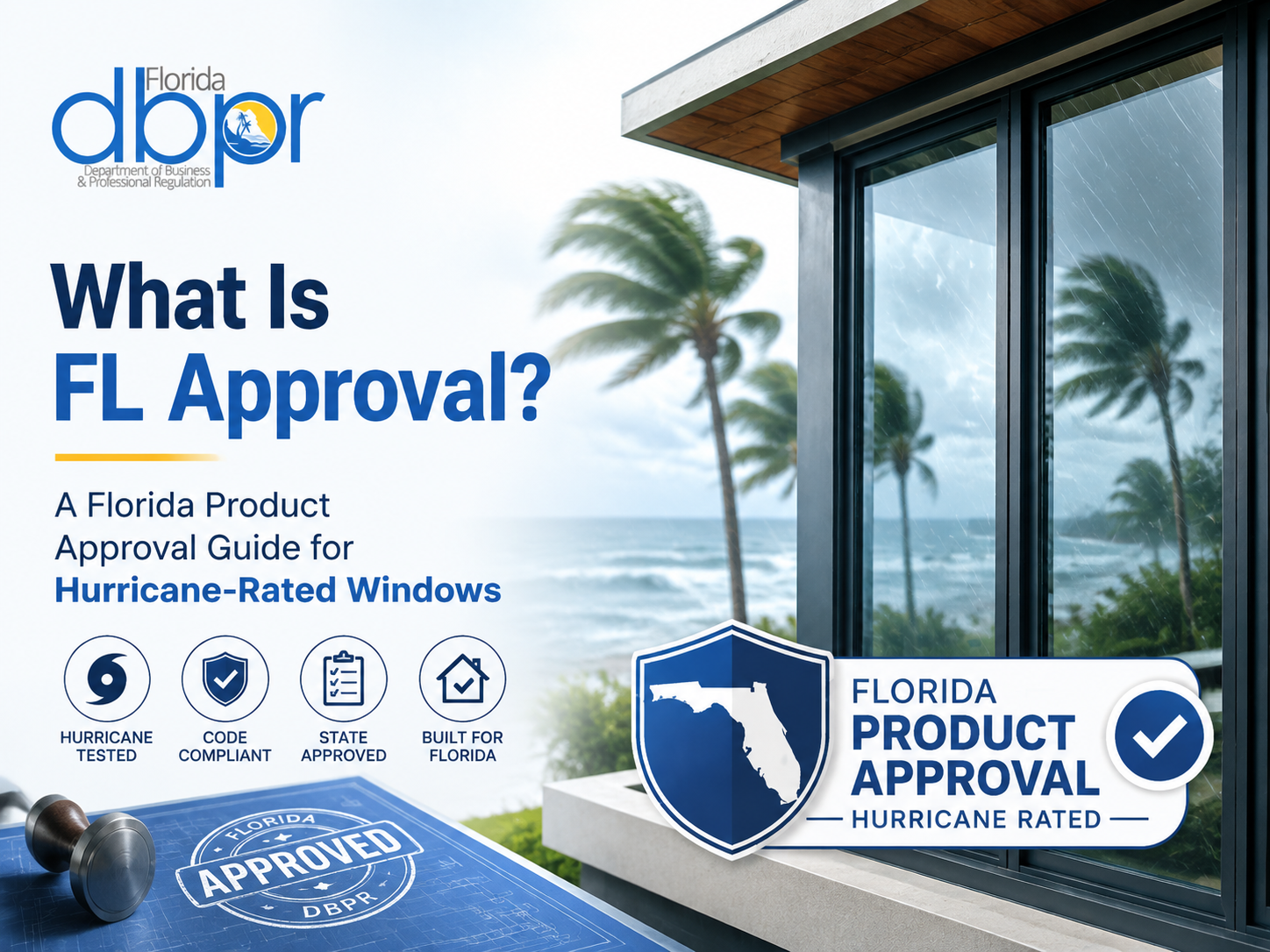
FL Approval (Florida Product Approval) is a statewide certification confirming that a window or door system meets the structural and weather-resistance standards of the Florida Building Code. It is not the same as a Miami-Dade NOA, and it does not automatically qualify a product for High-Velocity Hurricane Zones (HVHZ) like Miami-Dade or Broward County. Below, we break down what FL Approval actually covers, how it relates to NOA and CSA Florida Approval, and how to verify it before specifying or purchasing a window system.
1. What Is Florida Product Approval (FL Approval)?
Florida Product Approval is a state-level review process under the Florida Building Commission. It applies to products affecting a building’s structural integrity — including windows, doors, roofs, and shutters — and confirms that a specific product configuration has been tested against Florida’s wind, pressure, and water-infiltration standards.
How the FL Approval Number Works
- Every approved product is assigned a number in the format FL#####
- The number links to a public record on the Florida Building Code Online portal, showing the evaluation report, approved configurations, and installation instructions.
- The number alone does not confirm suitability for a specific project— the approved design pressure (DP) and configuration must match the actual opening.
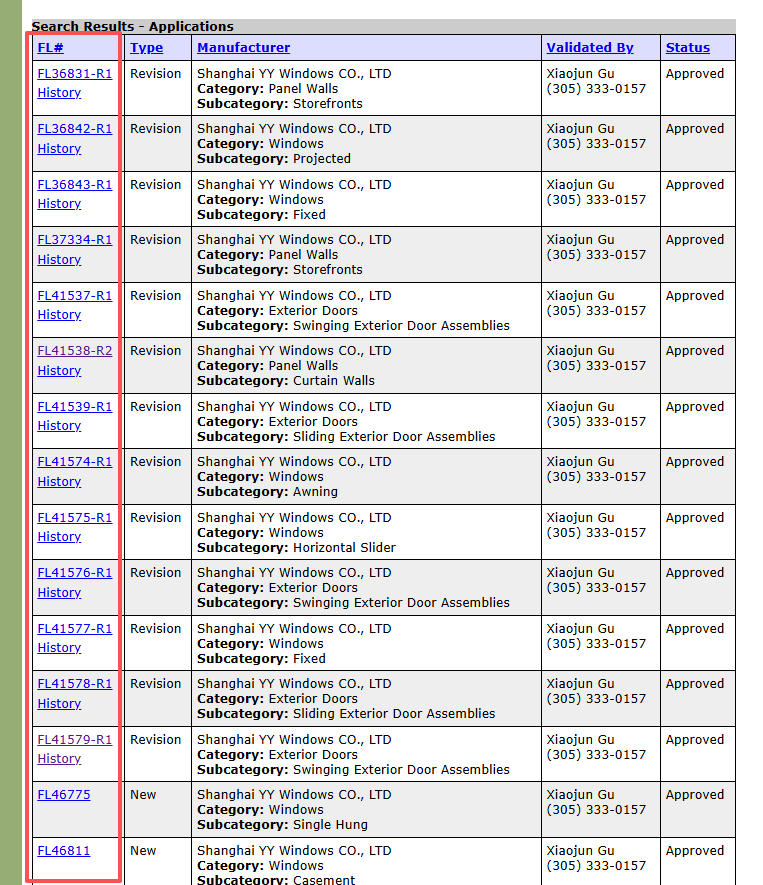
(Florida Approval Code)
What FL Approval Covers — and What It Doesn’t
- Covers: structural wind load performance, water resistance, and (for some products) impact resistance, evaluated by a licensed Florida engineer.
- Does not automatically cover: HVHZ installation eligibility, energy performance (a separate NFRC rating), or every possible glass/frame/hardware combination — only the specific tested configuration.
2. FL Approval vs. Miami-Dade NOA: What’s the Difference?
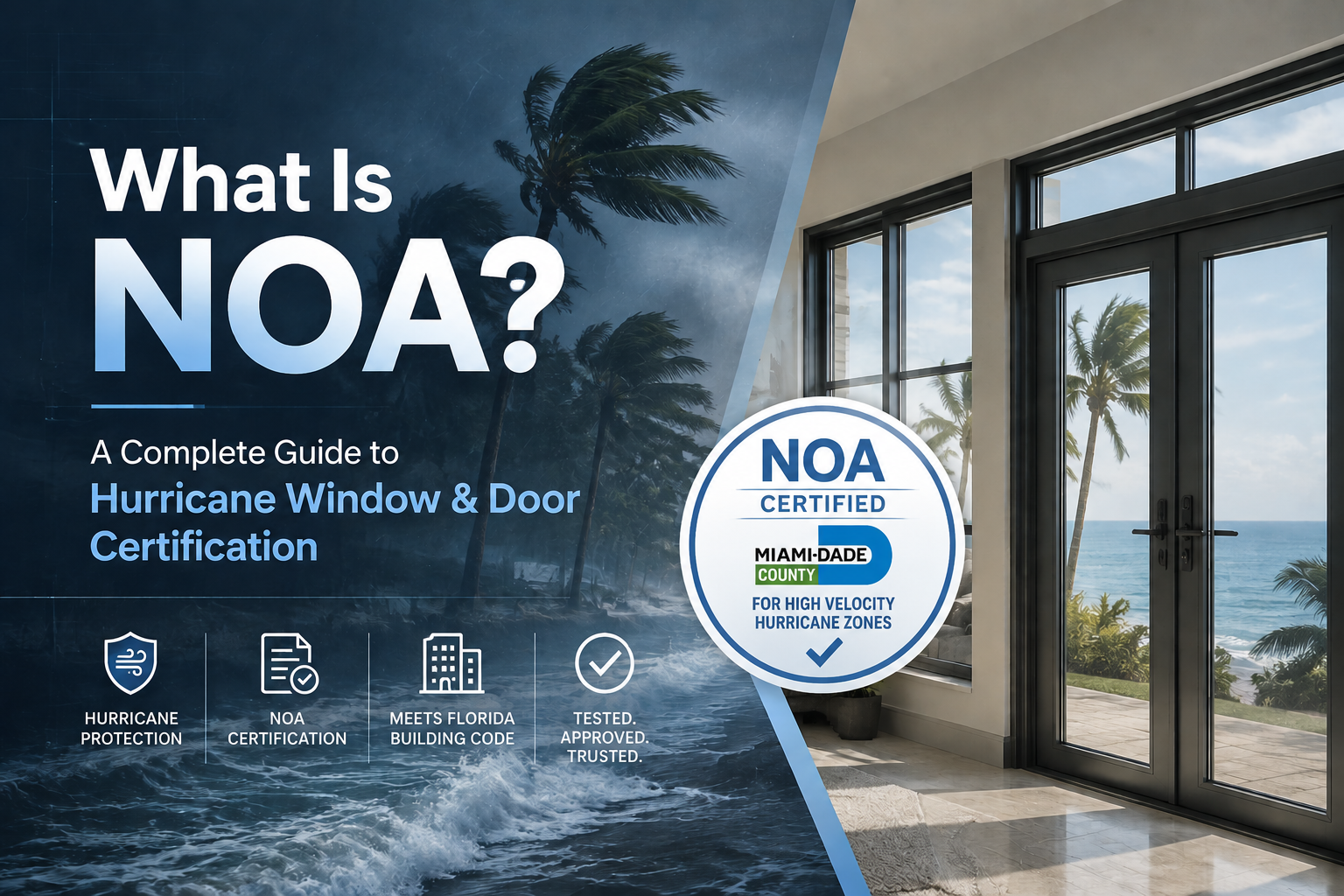
A product with FL Approval alone is not automatically code-compliant in Miami-Dade or Broward County. These two counties fall within Florida’s High-Velocity Hurricane Zone (HVHZ), which requires the state’s most rigorous testing standard — the Miami-Dade Notice of Acceptance (NOA).
Why HVHZ Zones Require Additional Testing
Miami-Dade’s testing protocol includes large-missile impact testing and thousands of cycles of positive/negative pressure to simulate sustained hurricane conditions. A standard FL Approval does not include this level of testing by default — a product must undergo the additional HVHZ-specific evaluation to earn NOA status.
Comparison Table
Certification | Issuing Authority | Coverage Area | Typical Use Case |
FL Approval (FLPA) | Florida Building Commission | Statewide, excluding HVHZ counties | Standard wind zones across Florida |
Miami-Dade NOA | Miami-Dade County (RER) | HVHZ counties (Miami-Dade, Broward); accepted statewide | High-velocity hurricane zones and coastal high-risk areas |
3. How to Verify a Window System’s FL Approval Number
Before specifying or purchasing, confirm the approval is both valid and applicable to the project.
- Search the Florida Building Code Online Product Approval databaseby FL number or manufacturer name.
- Check whether the record shows HVHZ approval— this is stated explicitly on the product record, not implied by the FL number alone.
- Match the approved design pressure (DP) and configuration(glass type, frame reinforcement, anchoring method) to the actual opening size and exposure category.
- Confirm the installation methodin the approval documents matches what will be used on site — an approval is only valid for the tested installation configuration.
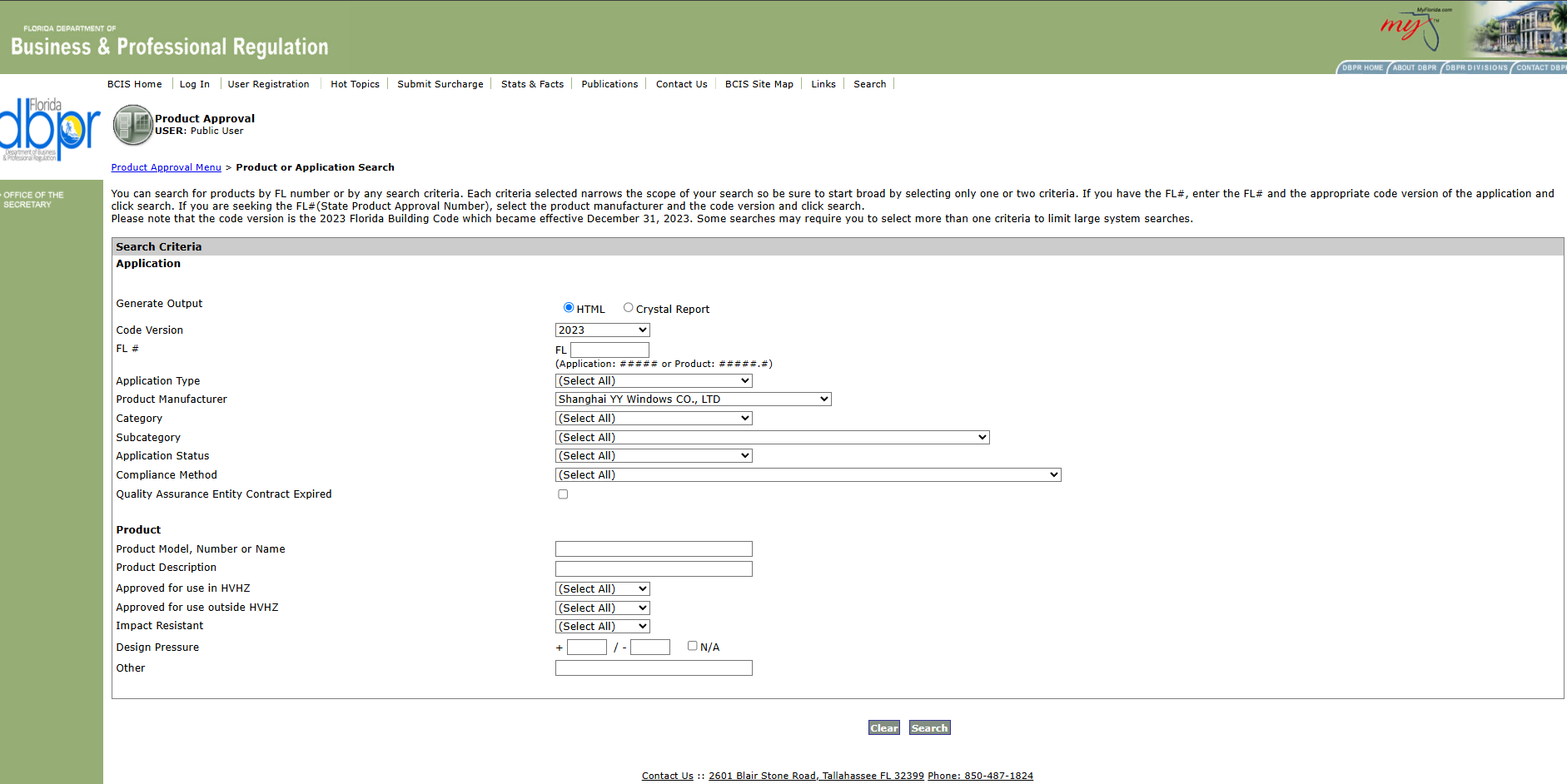
(The official inquiry page)
4. Why FL Approval Matters for Architects and Distributors
For Architects: Using FL Approval in Design & Permitting
FL Approval documentation gives architects the evaluation reports and approved configurations needed to specify compliant systems and move drawings through local permitting without delay. Matching the correct approval to the project’s wind zone and exposure category up front avoids costly redesigns during plan review.
For Distributors: Confirming Supplier Compliance Range
Distributors evaluating a manufacturer should confirm exactly which counties and configurations a supplier’s FL Approval covers — and whether HVHZ-specific NOA or CSA Florida Approval documentation exists separately. This distinction directly affects which markets a product line can legally serve.
5. How YY WINDOWS Approaches Certification Compliance
YY WINDOWS holds NFRC, NOA, CSA Florida Approval, and Intertek certifications, with performance data that is traceable and verifiable.
Each window is treated as a complete system — profile, hardware, glass, sealing, and installation — rather than a collection of separate parts, so that the certified performance holds true in the field, not just in the test lab.

(Pictures of YY products during the test )
FAQ
Q: Does FL Approval mean a window is hurricane-rated for all of Florida?
A: No. FL Approval confirms compliance with statewide Florida Building Code standards, but it does not automatically qualify a product for HVHZ counties like Miami-Dade or Broward, which require a separate Miami-Dade NOA.
Q: Can a product with only FL Approval be used in Miami-Dade or Broward County?
A: Generally no. Products without HVHZ-specific approval or a Miami-Dade NOA are typically not code-compliant in these counties.
Q: Where can I find a window’s FL Approval number?
A: It’s usually etched on the glass or printed on a label inside the frame, and can be verified on the Florida Building Code Online Product Approval database.
Q: Is FL Approval the same as an energy efficiency certification?
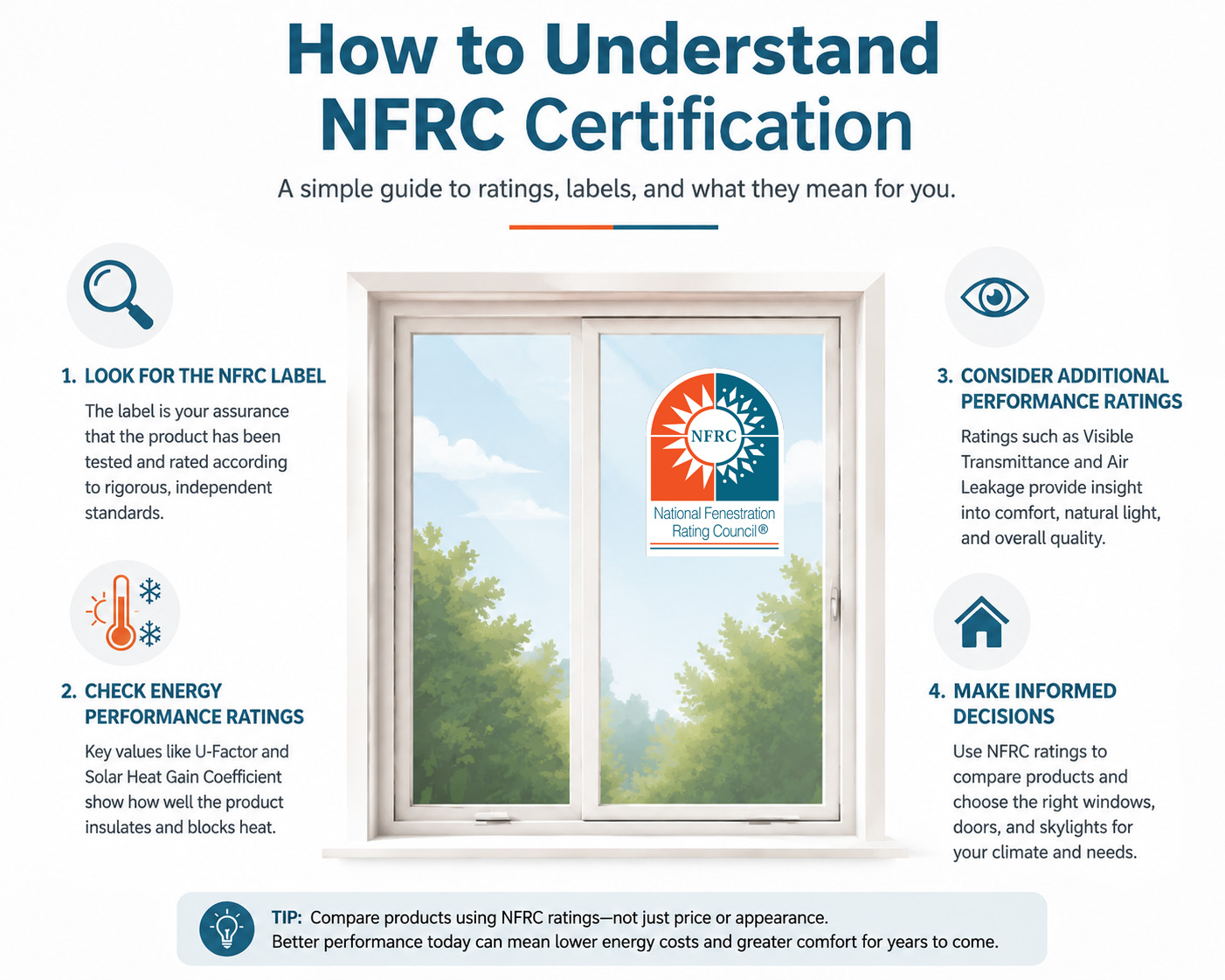
A: No. FL Approval addresses structural and weather performance; energy performance is certified separately through NFRC ratings.
Further Reading
- About YY WINDOWS— Learn about our factory, team, and mission
- Product Systems— Explore our energy-efficient and hurricane-rated aluminum window and door systems
- Project Case Studies— See real North American installations